Complete Guide to Pumpkin Varieties
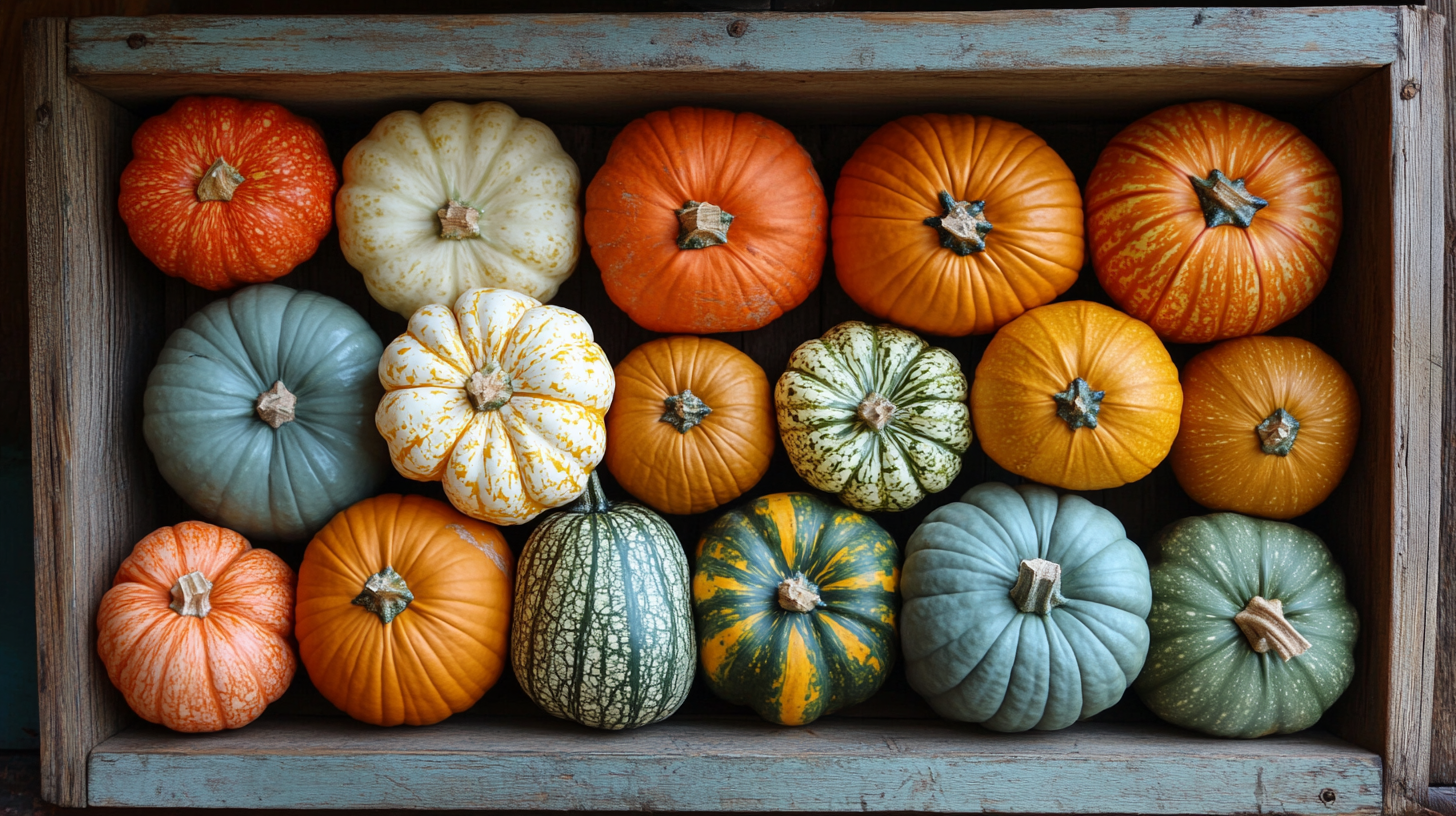
Choose a pumpkin for its main job first: good flesh for the kitchen, a workable shape for carving, or a color and size for display. Then check whether its vines and growing season fit your garden. A beautiful 125-day pumpkin is a frustrating choice if your warm season is only 100 days.
Pumpkin names cover several kinds of winter squash. Flesh texture, rind thickness, flavor, and keeping quality vary by cultivar and growing conditions. The biggest pumpkin is not automatically the best keeper, and the smallest fruit does not necessarily grow on the smallest plant.
Compare a few useful starting points
These are planning examples, not guaranteed harvest dates or sizes. Supplier selections and conditions differ, and days may be counted from sowing or transplanting. Read the packet for the exact seed you buy. Use the growing calendar to check the available season.
Scroll sideways to compare all columns.
| Variety or type | Approximate maturity | Expected fruit size | Plant habit and first use |
|---|---|---|---|
| New England Pie / Small Sugar types | About 100–110 days | Often 2–6 lb, depending on selection | Vining; a manageable kitchen pumpkin |
| Connecticut Field / Howden types | Often 100–115 days | Commonly 15–30 lb | Spreading vines; traditional carving and display |
| Jack Be Little | About 85–95 days | Palm-size, roughly 2–3 inches across | Vining despite miniature fruit; table décor |
| Spirit | About 100–110 days in extension’s intermediate group | Roughly 8–15 lb in that group | Semi-bush; a carving option for a smaller patch |
| Jarrahdale | About 100 days | Supplier examples reach 12–18 lb | Vining; blue-gray display and cooking |
| Musquée de Provence / Fairytale | About 125 days in the cited listing | Often 10–20 lb; larger fruit are possible | Vining; deeply ribbed cooking/display pumpkin |
| Atlantic Giant / Big Max types | Around 120 days or more | 50–100 lb or much more with suitable selection and care | Very large footprint; dramatic displays or competition |
The maturity/size groups for traditional and jumbo pumpkins come from Illinois Extension; its group estimates should not override a current packet. Cornell lists Jack Be Little at 85–95 days. The Jarrahdale figures appear in Johnny’s cultivar catalog, and the longer season for Musquée de Provence is documented in its cultivar description.
Cooking, carving, and storage tradeoffs
Scroll sideways to compare all columns.
| Type | Kitchen use | Carving | Storage outlook |
|---|---|---|---|
| Pie/cooking | Usually the first choice for smooth purée; moisture still varies | Small cavity and substantial flesh can limit a design | Store sound, cured fruit; use variety guidance rather than size alone |
| Traditional jack-o’-lantern | Edible when sound and untreated, but often less convenient for dense purée | Broad faces and usable cavities are the main advantage | Keep whole until near the event; carving sharply shortens life |
| Miniature | Some are useful for roasting; confirm an edible named variety | Too small for most detailed faces | Whole fruit can be useful keepers, but inspect often |
| Specialty/heirloom | Ranges from rich cooking flesh to mainly ornamental appeal | Ribs, warts, and hard rind can complicate cutting | Some are selected for keeping; no guarantee across the category |
| Giant | Large volume is more work and does not promise flavor | Difficult to move and cut safely | Injury and handling matter; don’t assume “large” means long storage |
Pie and cooking pumpkins
Sugar Pie / New England Pie: a sensible starting point for bread, pies, soups, and purée. “Sugar pie” is also a market label, so check for a named cultivar. These smaller pumpkins are easier to portion than a large field pumpkin. Roasted flesh may still need draining for baking.
Cinderella / Rouge Vif d’Étampes: the flattened red-orange shape makes a strong display, and the flesh can be used for soup and roasting. Deep ribs mean more awkward peeling. Do not buy it on a promise that all Cinderella pumpkins are dry or intensely sweet; texture varies.
Long Island Cheese: a tan, flattened cooking pumpkin named for its cheese-wheel shape. It is useful in both sweet and savory dishes. Allow space for vines and check the packet’s maturity date; this is not a bush pumpkin because it sits low to the ground.
Fairytale / Musquée de Provence: deeply ribbed fruit that develops toward a tan or bronze mature rind, with orange flesh. The 125-day example above is a warning for short-season gardens. If you cannot provide the season, buying a mature fruit may be more practical than growing it.
Try plain purée in pumpkin bread or freeze measured portions before adding spices. Once cinnamon and sugar go in, the batch has fewer uses.
Jack-o’-lantern varieties
Connecticut Field is a traditional large orange pumpkin. Howden selections are also common carving choices, often with broad faces and pronounced stems. Check the actual fruit for stability and sound skin instead of assuming a variety name guarantees easy cutting.
Rock Star is another carving selection to compare for shape and handle quality. Gladiator is a full-size carving hybrid, not a promise of a 50-pound giant. For either, use the supplier’s current maturity and weight range rather than a universal number.
A thicker wall is not always better for detailed carving. It can mean more scraping and harder cutting. Choose a flat base, a face that fits your pattern, and a size you can safely lift. Support the fruit from underneath: even a sturdy stem is not a carrying handle.
Use manual carving tools and a stable setup. No ordinary carving variety requires power tools. Keep fruit whole until close to the occasion; warmth, damage, and exposure affect carved life more than a tidy “lasts one week” claim.
Miniature pumpkins
Jack Be Little is the familiar tiny orange pumpkin for place settings and small displays. Baby Boo is white, and Munchkin is an orange miniature; “Munchkin” does not generally mean a mixed packet of white, yellow, and orange fruit.
These are useful when a whole table needs decorating without a dozen heavy pumpkins. They are less useful for intricate carving. Some named miniatures can be cooked, but confirm their identity and food suitability rather than treating an ornamental mixed pack as dinner.
Miniature fruit often grows on long vines. If you are using a trellis, reserve space and support the crop as described in vine management. For a tiny bed, choose by plant habit first.
White, blue, green, and heirloom pumpkins
Casper and Lumina offer pale rinds for decorating or carving. White skin does not tell you whether the flesh is especially good for a particular recipe. Check the cultivar’s kitchen description and expected mature size. Pale fruit can discolor in harsh conditions; protect your display rather than expecting perfect white skin indefinitely.
Jarrahdale has a blue-gray rind and deep ribs. It is a useful cooking/display combination with a reputation for keeping well when mature and undamaged. Seed selections can differ considerably in size, so a 6-pound expectation may be too small for some listings.
Galeux d’Eysines has salmon-toned skin with characteristic corky growths. Those natural markings are part of the variety; soft, wet, or spreading lesions are not. The irregular surface is interesting for display and less convenient for peeling.
Marina di Chioggia is a green, bumpy heirloom winter squash used in cooking as well as display. A green rind can be its mature color. Use rind and stem checks at harvest instead of waiting for every pumpkin to become orange.
Heirloom is not a promise of disease resistance, a short season, or superior flavor in every garden. Look for a cultivar whose maturity and known traits fit local conditions. In hot southern gardens, the planting window and pest pressure still matter even with a long frost-free season.
Related squash and decorative gourds
Blue Hubbard offers blue-gray skin and orange cooking flesh, but its hard rind and large size can make preparation demanding. Carnival is a smaller, patterned squash suited to individual servings. Delicata has cream-and-green striping and is convenient for roasting. These are winter squash included for their kitchen and display overlap; their curing and storage needs are not all identical to pumpkins.
Bottle and swan gourds belong in craft planning. Properly dried hard-shell gourds can become lasting decorations, but an ornamental gourd is not interchangeable with an edible pumpkin. Keep unidentified ornamental fruit out of food projects.
For a reusable display, decoupage on a suitable craft pumpkin is another option.
Compact pumpkins for small gardens
Look for the words bush, semi-bush, or a stated short vine habit. Spirit is a semi-bush example; Bushkin is listed as bush by Illinois Extension. Availability and selections change, so verify the packet rather than searching for the smallest pumpkin in a photograph.
Compact plants still need several feet of room, sun, a substantial root zone, and pollination. A useful comparison is one properly spaced plant against several crowded seedlings: the single plant is usually the more workable plan.
The planting guide’s example layouts show how bush, semi-bush, and vining spacing differ. If a container is your only space, use a cultivar with explicit container guidance and follow its volume recommendation.
Large pumpkins for competitions or displays
Atlantic Giant is associated with competition growing; Big Max, Big Moon, Mammoth Gold, and Prizewinner are other jumbo types listed by extension. They are not substitutes for a small garden carving crop.
These plants need a long suitable season, a large footprint, careful feeding and watering, and a plan to move the fruit. Competition growers often manage one selected fruit, but that is a specialized approach, not a reason to thin every ordinary pumpkin vine.
Buy seed with clear lineage or cultivar details if size is your goal, and check the contest’s current entry requirements. No seed packet can promise a winning weight. Before planting, decide how a pumpkin too heavy to lift will leave the patch.
Match the choice to your season and shelf
For a northern garden, compare maturity estimates before color. For a southern fall crop, work backward from the display date and local recommended planting window. In a long-season area, leave room in the plan for heat, water availability, and pest management.
At a farm stand, choose firm, sound fruit and ask the variety name if you plan to cook or store it. A pumpkin that feels heavy for its size may have substantial flesh, but weight alone does not measure sweetness.
September through November brings many pumpkins to temperate U.S. markets, though local harvests and stored supplies vary. For your own crop, use harvesting, curing, and storage guidance. Label what you keep and note how it cooks. A variety that ripens reliably and fits your favorite recipe has earned its space next year.