Pumpkin Plant Care: Watering, Pollination, and Troubleshooting
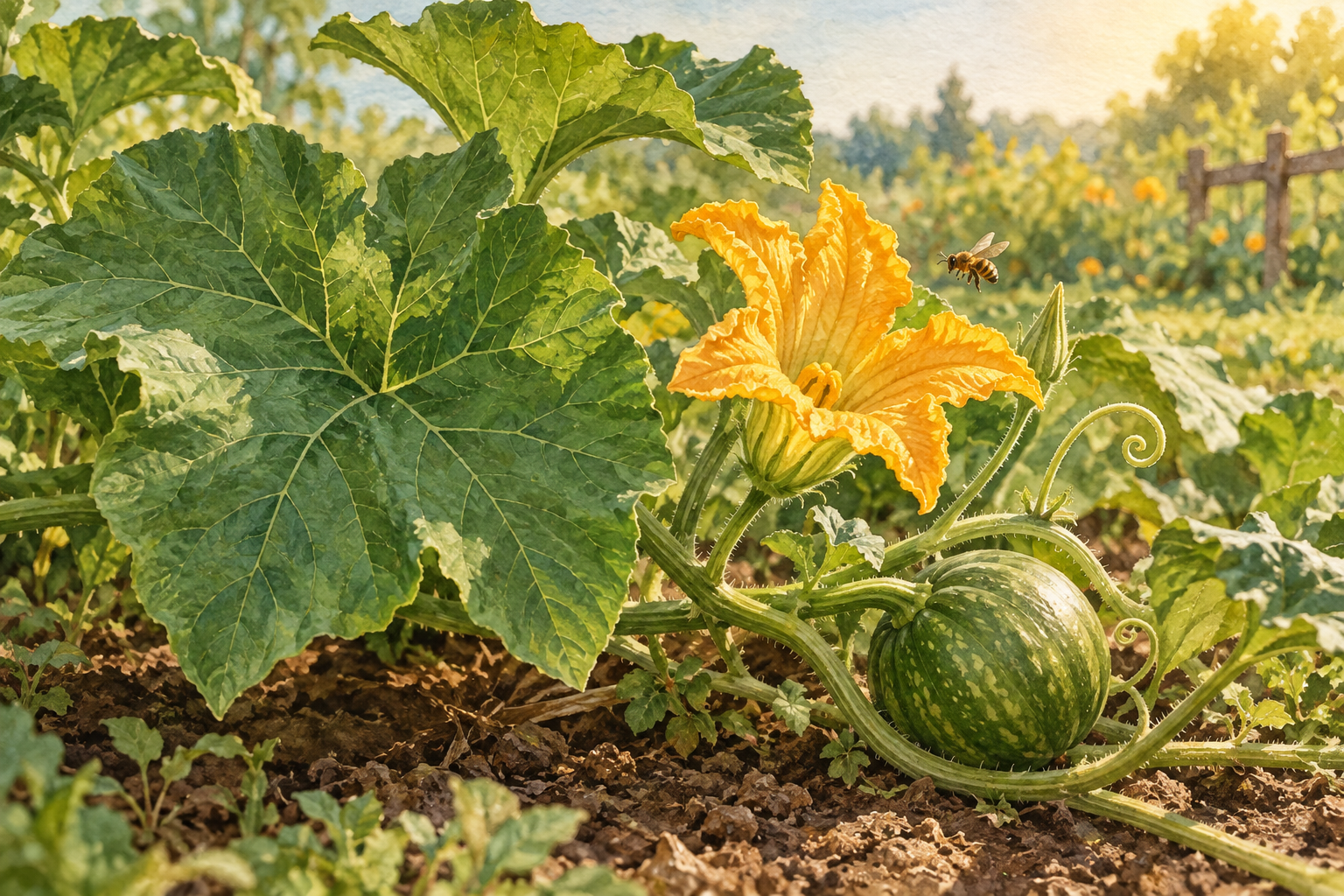
Pumpkin care comes down to steady moisture, enough room for healthy leaves, and a close look at flowers and pests. When a plant struggles, check the soil and inspect it before reaching for fertilizer or a spray. Yellow leaves and wilting can have several causes.
For seasonal timing, keep the growing calendar nearby. If you are still choosing a bed, begin with planting and spacing.
Looking for a specific problem? Jump to pollination and hand pollination or troubleshooting by symptom.
Water the root zone, then check it
Water slowly at the base of the plant, allowing moisture to soak in rather than run away. Around 1–2 inches a week, including rain, is a useful starting range in Utah State Extension’s guidance. It is not a fixed allowance: sandy soil, heat, containers, and heavy rain change the job.
Check a few inches below the surface. If it is still damp, wait; if it is dry, water thoroughly. A rain gauge and a finger in the soil can prevent both neglect and enthusiastic overwatering.
Large leaves may droop in afternoon heat and recover when temperatures fall. Check again in the cooler morning before adding water to already-wet soil. Persistent wilting deserves a look at the crown, stem, and roots.
Once the ground has warmed, mulch helps reduce evaporation and weeds. Keep mulch loose and away from the crown. Watering at soil level reduces leaf wetness, but it does not guarantee freedom from mildew.
Feed according to the soil, not the month
A soil test is the best basis for adjusting pH and nutrients. Compost contributes organic matter and some nutrients, but its composition varies. If fertilizer is needed, follow local crop guidance and the label’s rate and placement; keep concentrated fertilizer away from the stem.
Do not automatically add phosphorus because flowers are opening. Nor does every yellow leaf call for nitrogen. Too much nitrogen can encourage foliage while delaying or reducing fruit production. Minnesota Extension discusses fertilizer, heat, and other causes of poor fruit set.
Calcium products are not a universal fix for fruit-end problems. Uneven moisture and impaired roots can interfere with nutrient uptake even when nutrients are present. Diagnose before adding more.
Vine direction and space
Guide young, flexible runners toward open ground. Once vines root at their nodes, moving them can tear those roots. Keep a walking route so inspecting the patch does not mean stepping across stems every morning.
Leave healthy leaves in place. They supply the fruit with energy and shade it from strong sun. Routine heavy pruning or removing leaves just to expose orange fruit can do more harm than good. Remove badly damaged material selectively with clean tools and seek local advice if disease is spreading.
Small-fruited vining pumpkins can climb a sturdy trellis if each fruit is supported with a broad, soft sling. Check ties as stems expand, and keep supports out of walkways. A thin decorative trellis is not a safe support for a crop of heavy pumpkins.
If the space never fitted the plant, plan a bush or semi-bush variety next season. The growing-tools guide explains when supports earn their space.
Pollination and hand pollination
Male flowers sit on a narrow stem. Female flowers have a small pumpkin-shaped swelling behind the petals. Male blooms commonly appear first, and the timing of female flowers varies. That first week of flowers can feel unproductive without anything being wrong.
Bees move pollen between flowers, generally during the morning opening period. Remove row covers when flowering starts so pollinators can enter. Encourage nearby flowers, and avoid unnecessary pesticide exposure.
If female blooms open but bee visits are scarce, try hand pollination:
- In the morning, choose a newly open male flower and an open female flower on a compatible pumpkin plant.
- Peel back the male petals to expose the pollen-bearing anther, or collect pollen with a clean, small brush.
- Gently touch pollen to the lobes of the female flower’s stigma in its center.
- Mark the stem loosely with the date and watch the young fruit over the next several days.
This can help with pollen transfer; it cannot overcome severe heat stress, disease, or a plant without enough resources to support fruit. Avoid tight string around growing stems.
Maryland Extension’s pollination guidance explains why flowers and small fruit may drop. A swollen ovary is not yet a successfully set pumpkin.
Pests and diseases
Identify the pest and its life stage before choosing a treatment. Local extension can help with photographs of leaf undersides, the crown, and the whole plant. Pest timing differs by region.
Squash bugs
Look for bronze-colored egg clusters under leaves, gray young bugs, and flattened brown adults. Small plants are especially vulnerable. Inspect often, remove eggs carefully, and hand-pick bugs into soapy water where practical. Remove crop debris at season’s end.
University of Minnesota’s squash bug guidance explains identification and control limits. Large established populations are harder to manage than small nymphs.
Cucumber beetles
Striped or spotted beetles chew seedlings and flowers; some also transmit bacterial wilt. Young plants need close attention. A properly sealed cover can reduce access before flowering, but cover management must account for heat and pollination.
Beetle damage and wilt are not interchangeable diagnoses. Minnesota Extension’s cucumber beetle guide helps distinguish the insect and the diseases associated with it.
Squash vine borers
Sudden wilting with sawdust-like material near the stem base can indicate a borer, especially where the insect is established. Eggs hatch into larvae that feed inside stems. Water alone will not repair that damage.
Prevention depends on local flight timing. Covers can help on a rotated bed, but borers may emerge beneath them if affected squash grew there previously. Removing larvae from an injured stem is not a guaranteed rescue. Use Minnesota Extension’s borer guidance for region-appropriate steps. Foil wrapping is not reliable protection for every exposed part of a vine.
Powdery mildew, downy mildew, and other leaf problems
Powdery mildew often appears as white, powdery patches. Downy mildew can cause angular yellow lesions with darker growth beneath; it is a different disease and may need different management. Some squash leaves have natural pale markings, so compare new symptoms with healthy foliage.
Choose resistant cultivars where available, give leaves room, and avoid unnecessary leaf wetness. These practices reduce some risks but do not eliminate disease. See powdery mildew and downy mildew identification guidance before buying a treatment.
Aphids can curl new growth, and viruses can produce mottled leaves or distorted fruit. A plant with suspected virus symptoms needs identification; fertilizer or fungicide will not cure a virus.
If a pesticide is warranted, the label must allow its use on the crop and target problem. Follow application rates, protective equipment, temperature limits, pollinator precautions, and the preharvest interval. “Organic” does not mean harmless. Avoid improvising soap or oil concentrations, and do not assume an evening spray makes every product safe for bees.
Troubleshooting by symptom
Scroll sideways to compare all columns.
| What you notice | Check first | A useful next step |
|---|---|---|
| Yellow lower leaves | Age of the leaf, wet soil, roots, spreading spots | Compare with new growth; correct moisture or seek diagnosis before feeding |
| Flowers but no fruit | Male versus female blooms, heat, bee access | Open covers and observe morning flowers; try hand pollination if needed |
| Tiny fruit yellows and drops | Pollination, heat, water stress | Keep moisture steady and inspect newly open female blooms |
| Misshapen fruit | Variety’s natural shape and uneven pollination | Improve bee access; established distorted fruit will not become symmetrical |
| Whole vine stays wilted | Dry versus saturated soil, damaged stem, frass | Inspect the crown and ask extension about borers or wilt disease |
| White or angular leaf patches | Natural markings versus spreading lesions | Identify the disease and protect healthy foliage using local guidance |
When the pumpkins begin to color
Keep checking moisture and leaves while fruit matures. A colorful pumpkin may still have a tender rind. Use rind, stem, and frost checks before cutting.
Save a photo and a short note about any recurring problem. “Wilted August 4; soil damp; frass at crown” gives next season’s planning more direction than “pumpkins didn’t do well.”