Pumpkin Growing Tools: What You Need and What Can Wait
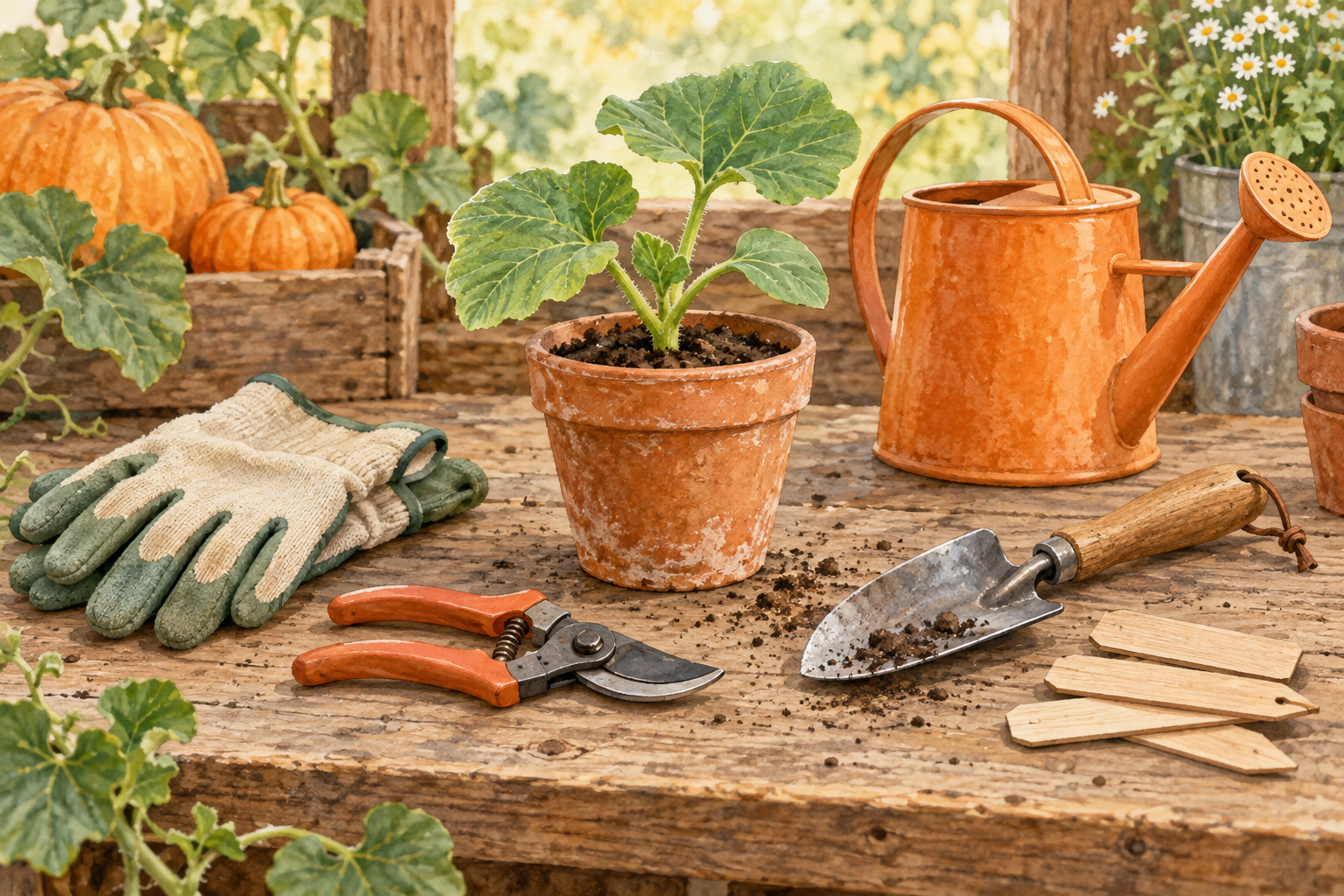
A small pumpkin patch does not need a shed full of equipment. Start with a way to check soil warmth, water gently, mark your plants, and cut mature stems safely. Add covers, indoor-starting supplies, or a trellis only when your garden presents that particular problem.
As an Amazon Associate, Pumpkinish earns from qualifying purchases. These links help you compare supplies; Pumpkinish does not claim to have personally tested the products shown.
The growing calendar explains when each job comes around. This guide is about deciding what is worth buying—and what an existing tool can already do.
A quick shopping plan
Scroll sideways to compare all columns.
| Your situation | Start with | Buy only if needed |
|---|---|---|
| One or two direct-sown plants | Soil thermometer, labels, existing watering gear, gloves, suitable pruners | Row cover where pests or cool conditions justify it |
| A short-season garden | The basics plus individual seed pots and adequate light | Heat mat with control, hoops and cover |
| A small space with small-fruited vines | The basics and a measured growing area | Load-rated trellis, anchors, fruit slings |
| Several vines and a sizeable harvest | The basics, efficient watering, carrying help | Drip kit, cart, ventilated crates, rated shelving |
A tool can be essential for a task without being a new purchase. If a hose attachment already waters softly and a pair of pruners cuts cleanly, use them.
Soil temperature and soil testing
A soil thermometer answers a specific spring question: is the seedbed warm enough? Choose a probe designed for soil, with clear markings around the temperatures you need and instructions for reading depth and waiting time. A readable dial is often enough; digital is useful if you prefer it.
Compare garden soil thermometers rather than infrared surface thermometers, which do not measure the buried seed zone. A compost thermometer may have an awkwardly long probe for a small seedbed. Check temperatures over several mornings as described in planting pumpkins.
A laboratory soil test is useful before buying fertilizer. Ask local extension which lab and sampling method to use. A clean bucket, a trowel, and suitable sample bags may be all the equipment required. Basic home test kits have limits; cheap multi-purpose probes should not be treated as a complete nutrient analysis.
For compost, a large commercial tumbler is optional. Use finished compost appropriate to your soil and available space. Buy testing or composting equipment to solve a known need, not because pumpkins are described as “heavy feeders.”
Seed starting and labels
Individual pots or sturdy cell trays are useful if you need a short indoor start. Deep enough cells and easy root-ball removal matter more than a large cell count. A tray with a separate watertight catch tray helps protect the windowsill or shelf.
Compare reusable seed-starting pots and trays for rigidity, drainage, and cleanability. Biodegradable pots can reduce handling but dry out quickly and may not break down as expected in dry soil. Follow their planting instructions.
Strong light is necessary for sturdy indoor seedlings; a heat mat warms the root zone but does not replace light. Use a mat only as directed, with temperature control where appropriate. For a direct-sown crop in a warm season, you can skip this equipment entirely.
Plant labels and a weather-resistant marker are inexpensive and useful in nearly every patch. Look for labels with enough room for variety and sowing date. Smooth stones or reusable labels can work if the writing stays readable. Keep the same details indoors as a backup; sun, irrigation, and curious feet can defeat a garden marker.
Gloves and watering gear
Garden gloves help with prickly stems, rough supports, and cleanup. A close fit and a grip that works when damp matter more than heavy padding. Thin coated gloves give dexterity; tougher gloves offer more protection from abrasion but can make small tasks clumsy. Neither makes your hand safe in a blade’s path.
A watering wand lets you reach the root zone without blasting soil away. Compare watering wands with a gentle setting and shutoff for reach, weight, and compatible hose fittings. A long metal wand can become tiring, and a multi-pattern head adds little if you use only one setting. Replace leaking washers before replacing the entire hose.
For several vines, a soaker hose or drip line can save repeated trips across the patch. Check pressure and connector requirements and lay it before vines spread. A timer is optional; inspect the soil and the system rather than assuming every scheduled cycle delivered the right amount. See watering guidance.
Row covers: useful protection with a deadline
Row covers are situational equipment. They can protect young plants from insects or provide limited cold protection, depending on the material. They also exclude bees and can trap heat.
When comparing covers, insect mesh, and supporting hoops, read the material’s purpose. Fine insect netting is not automatically a frost blanket. Check width after allowing room over hoops and enough fabric to secure the edges.
Buy clips or suitable anchors as part of the setup. An unsecured cover flapping against plants is not effective exclusion. Remove covers for pollination when flowering begins, and avoid trapping pests that emerge from previously infested soil. The pest and pollination guide explains the tradeoffs.
Supports and small-space growing
A trellis is optional for small-fruited vining varieties and unsuitable for an ordinary heavy pumpkin unless the structure is specifically engineered for that load. Bush plants do not become productive climbers because a trellis is nearby.
Look for strong anchoring, a stated load capacity where available, and openings you can reach through. Wind, wet foliage, and several fruit add load. Compare sturdy garden trellises by construction and dimensions, not a picture of a single lightweight vine.
Use broad, soft slings for developing fruit and inspect them as fruit expands. Repurposed clean fabric may work; narrow cord can cut into stems or rind. A tomato cage or decorative arch may be too weak.
The cheapest space solution may be choosing a compact variety and leaving it on the ground.
Harvest and storage
Hand pruners or a suitable harvest knife are necessary for cutting stems without tearing them. Bypass pruners are useful for many garden jobs. Compare hand pruners for cutting capacity, hand size, a reliable lock, and replaceable parts if you expect regular use. Clean, sharp existing shears are a sensible budget choice.
A harvest knife is an alternative for stems that suit it, but the exposed blade requires care and a safe storage sheath. Do not use pruners beyond their rated thickness or force a blade toward your supporting hand. Harvest technique matters more than owning both tools.
A cart or a second pair of hands is useful for heavy fruit. Support pumpkins underneath; don’t lift by their stems. Consider the weight and route before growing giants.
Ventilated crates or shelves are useful when the harvest exceeds a few fruit. Compare produce storage crates for airflow, a washable surface, and realistic load capacity. A clean, strong shelf may work better than a new stack of crates. Leave room to inspect every pumpkin and avoid fruit-to-fruit pressure.
Dry cardboard or cushioning can reduce contact damage; replace it if damp. Whole pumpkins need air, not sealed packaging. An inexpensive room thermometer helps check the curing and storage space.
Spend on the part that is making the work difficult
If the seedbed is cold, a thermometer and a later sowing date help more than fertilizer. If watering takes too long, fix the hose route before buying an elaborate harvesting kit. If you harvest two pumpkins, a clean shelf may be plenty of storage.
Keep kitchen tools separate from the garden kit. Once the harvest comes indoors, the pumpkin prep-tools guide and preserving guide cover the next job.